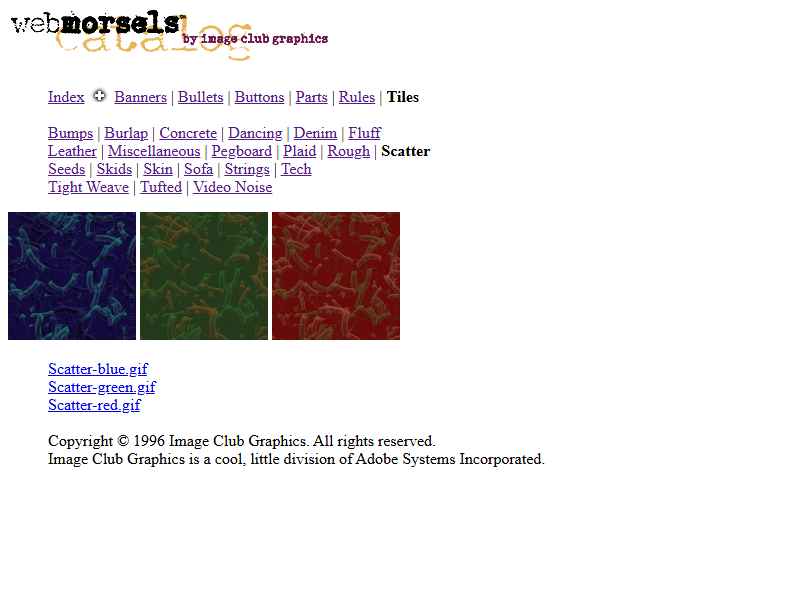
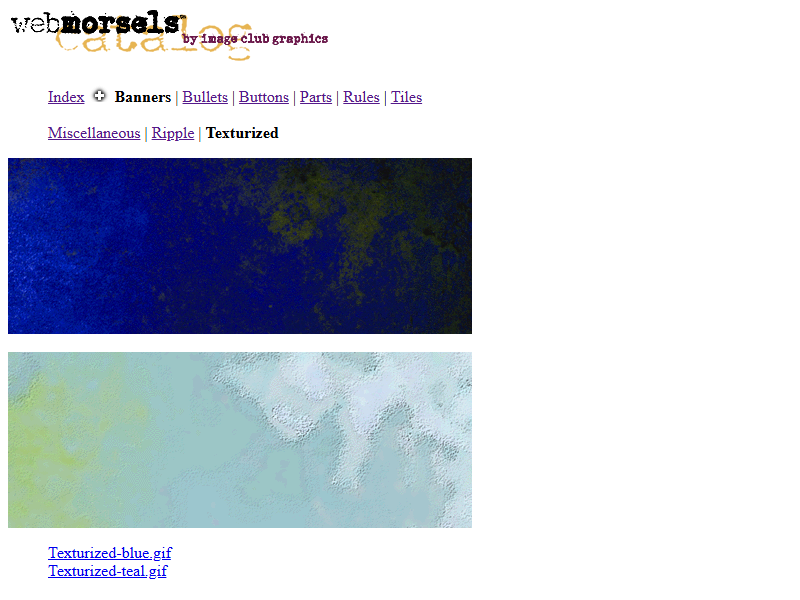
Just over a week ago, I wrote a blogpost about Adobe PageMill. The kinda tool that could only ever have existed in the mid-to-late-90s, PageMill was a boxed CD-ROM Web page builder, and I find it neat. Being an Adobe product, you can imagine it came loaded up with some Adobe extras (install Acrobat, dammit!), but some of those extras have sent me down an additional rabbit hole. Specifically, it was a pack of Web-ready bullets, rules, headers, and backgrounds under the banner of Image Club Graphics–all stuff I love and stuff I could use in my various old Web pursuits.

My searches for more turned up precious little–until I knew what I was digging for. In the right spaces, you can still find their wares online, and I have some sampler discs from their lot to show you nonetheless. I hope you enjoy photos of cake, Smarties, businessmen, clocks, widgets for your Geocities site, and some jarringly quirky 90s handwriting and dingbat fonts.
(Fair warning that this is going to be a very image-heavy post and filled with the little-seen-on-Letters gallery block type. I know Letters is generally decently old browser friendly–this page may not be, or it may be slow. I’ve tried to optimize things where I can, but we’re gawking at shit today, so it comes with the territory.)
Of course, first we gotta get a hit of the history lesson

Our tale begins with Greg from Calgary. Greg Kolodziejzyk has had quite the spirited life (quite literally–peep the bit about his experiences with remote viewing) if the bio on his adventuresofgreg Blogspot is anything to go by. In the 80s, he was an engineering student who wasn’t exactly enthralled with the idea of working at an oil company, so he instead became a freelance graphic designer and software developer, getting his dad to cosign a lease on a Mac 512k and a brand new LaserWriter. With it, he formed Image Club Graphics:
Image Club developed a line of content software products for the explosive new desktop publishing market. Our direct sales catalog was mailed out to millions of subscribers every quarter. We had a room filled with 1-800 phone operators standing by, and happy to take customer orders for innovative products like digital stock photography, digital fonts and digital clip art. In fact, Image Club was the first company in the world to offer stock photographic imagery on CD-ROM disc. I think we played a large role in what became an absolutely massive digital stock photography industry.
Those fonts are what Image Club is best remembered for today, and through font houses like Monotype, you can actually still buy their work. What might not be immediately obvious if you don’t know anything about fonts and are used to having to throw your phone out every four years is that fonts have been vector, basically perfectly resizable, for over thirty years now. They don’t look blocky, they don’t look aged, they just look like fonts. This means that the same ones made in the early 90s can be used today for various purposes and you’d literally never know. This is why it’s hard to “date” fonts, outside of specific aesthetic bits that might remind you of the 90s. They just look like fonts.
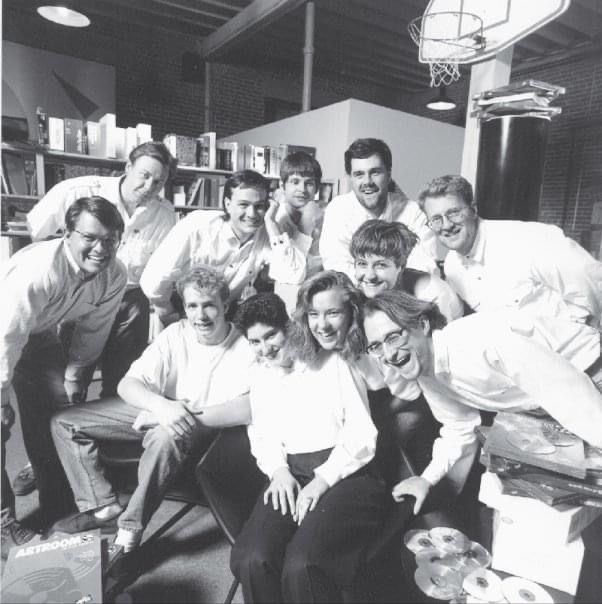
Greg goes on to describe an unnamed Fortune 500 company offering him millions for Image Club. Apparently they busted his balls and he instead sold it to Adobe in 1994. This is technically not true. Image Club was actually sold to Aldus, aka the PageMaker people, in April 1994, who would soon themselves be acquired by Adobe. The end result is the same, though–by 1995, Adobe held the keys to the Image Club kingdom. Greg retired, went running and kayaking with his family across the world, and later founded AlgoLab, a company specializing in algorithm-based stock trading. What a guy.
Image Club would continue as an Adobe brand into 1998 or so, producing clip art CDs, stock photo libraries on CD, and of course, the WebMorsels brand we first found on the PageMill CD-ROM. After that, they were rebranded as Adobe Studios (good luck finding dick or shit about that one online!), and apparently operating at a great loss, were bought by investors and workers at Adobe and spun back off into their own company, Eyewire. They were snapped up by Getty Images in 1999 during a period of great competitive expansion against Bill Gates’ stock photo company Corbis, and Monotype would take their typeface work in the early 2000s, whom still sells them today as said. On being acquired by Getty, CNET estimated Image Club had some 50,000 stock photos and 1,000 fonts for sale. Not a bad run for a company you’ve never heard of!
In putting this post together, I did do a quick eBay search for “adobe image club graphics”; my due diligence says that sometimes, eBay has what the Internet Archive doesn’t and vice versa, and I wanted to make sure anything I could use to complete this post was at least an option to me. Aside from people overcharging for their old catalogs, it seems their Circa:Art packages are the ones you can most commonly find for sale. I also found someone selling one of the sampler CDs I’m about to show off, sealed, for $15.
eBay sellers, you gotta get your head in the game. $15 for an ancient clip art sampler? Were your parents related? Is huffing jenkem part of your daily routine?
Flicking through an Image Club catalog (in PDF, of course)
I’m not paying some asshole in Quebec $20 to leaf through a fucking catalog, so I’m rather grateful a PDF copy of one was included on one of the sampler CDs I’m gonna show you today. This nicely sets up what Image Club truly had to offer–sadly, WebMorsels is nowhere in sight, so I come away empty-handed for what I truly came to see. Their other ranges are represented nicely.
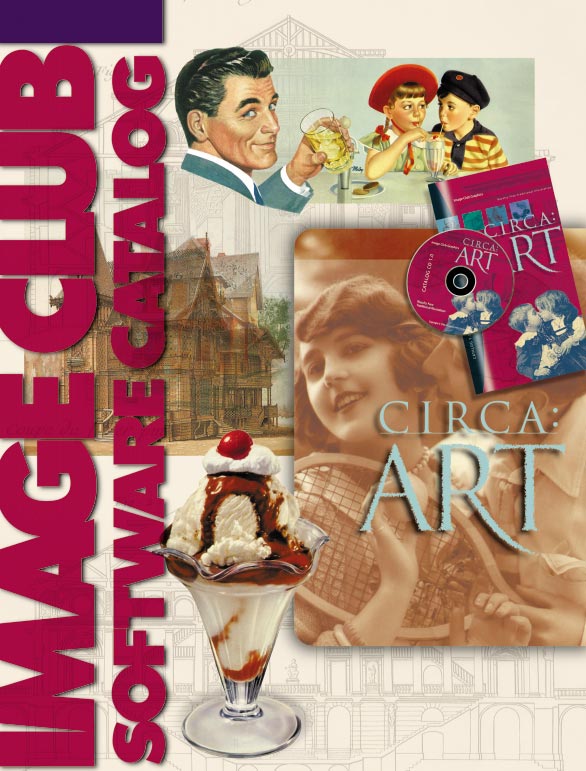
Image Club had five main ranges: DigitArt, for clip art, PhotoGear and Digital Vision, for stock photos, ObjectGear, specifically stock photos of random objects, and Circa:Art, historical stock photos. All are nicely represented here with their own full page spreads. You also get the prices of these packs, and they weren’t cheap! DigitArt Artroom, which isn’t just a clip art pack, it’s one specifically made by designers at Image Club, was $800, or $150-200 for the upgrades if you owned a previous version. Over 10,000 images, but still–that’s a spicy meatball right there. The other CD-ROM packs weren’t a ton better: $250 for a Digital Vision set, $80 for a single edition of PhotoGear, $100 for a flavor of ObjectGear, and $150 per volume of Circa:Art.
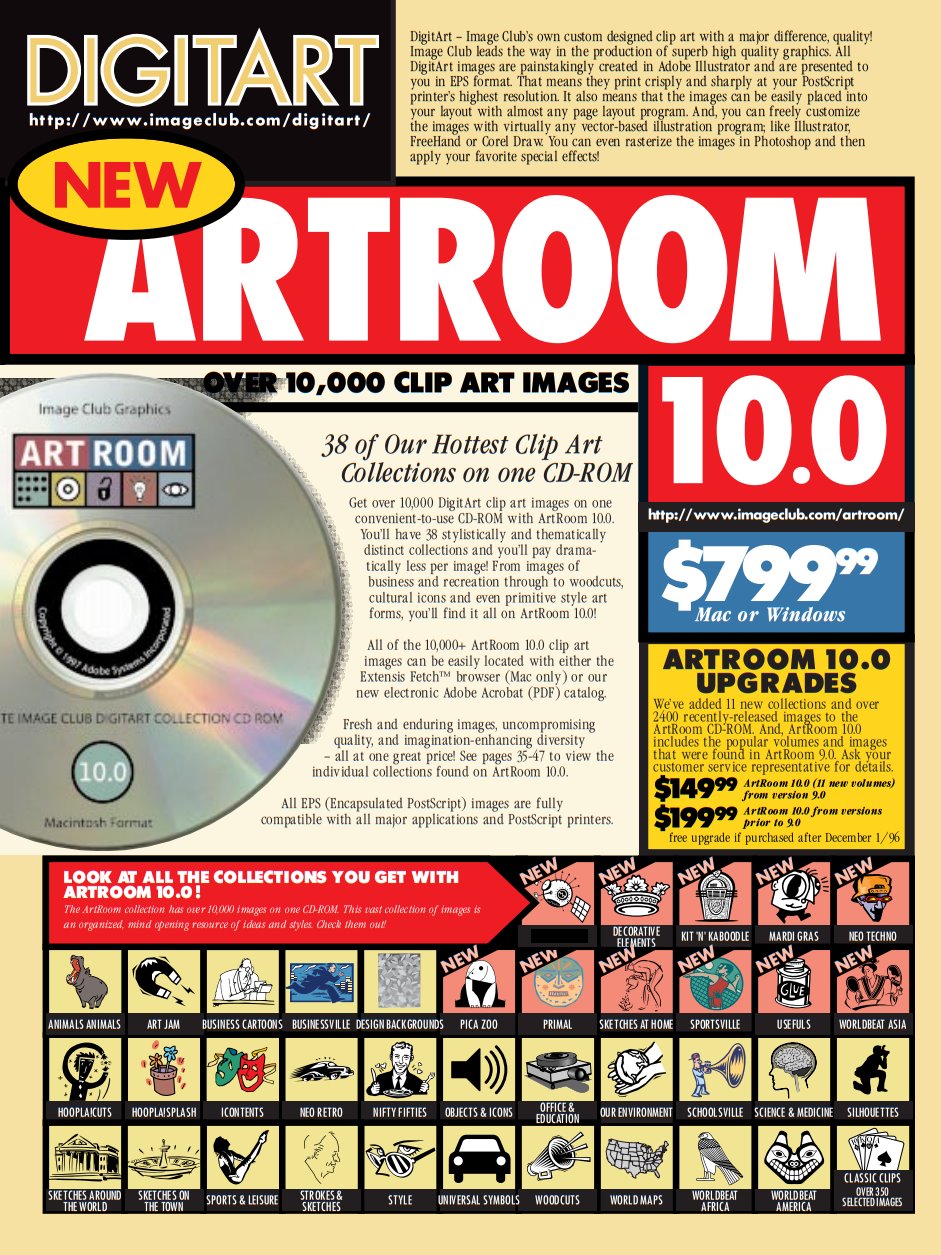
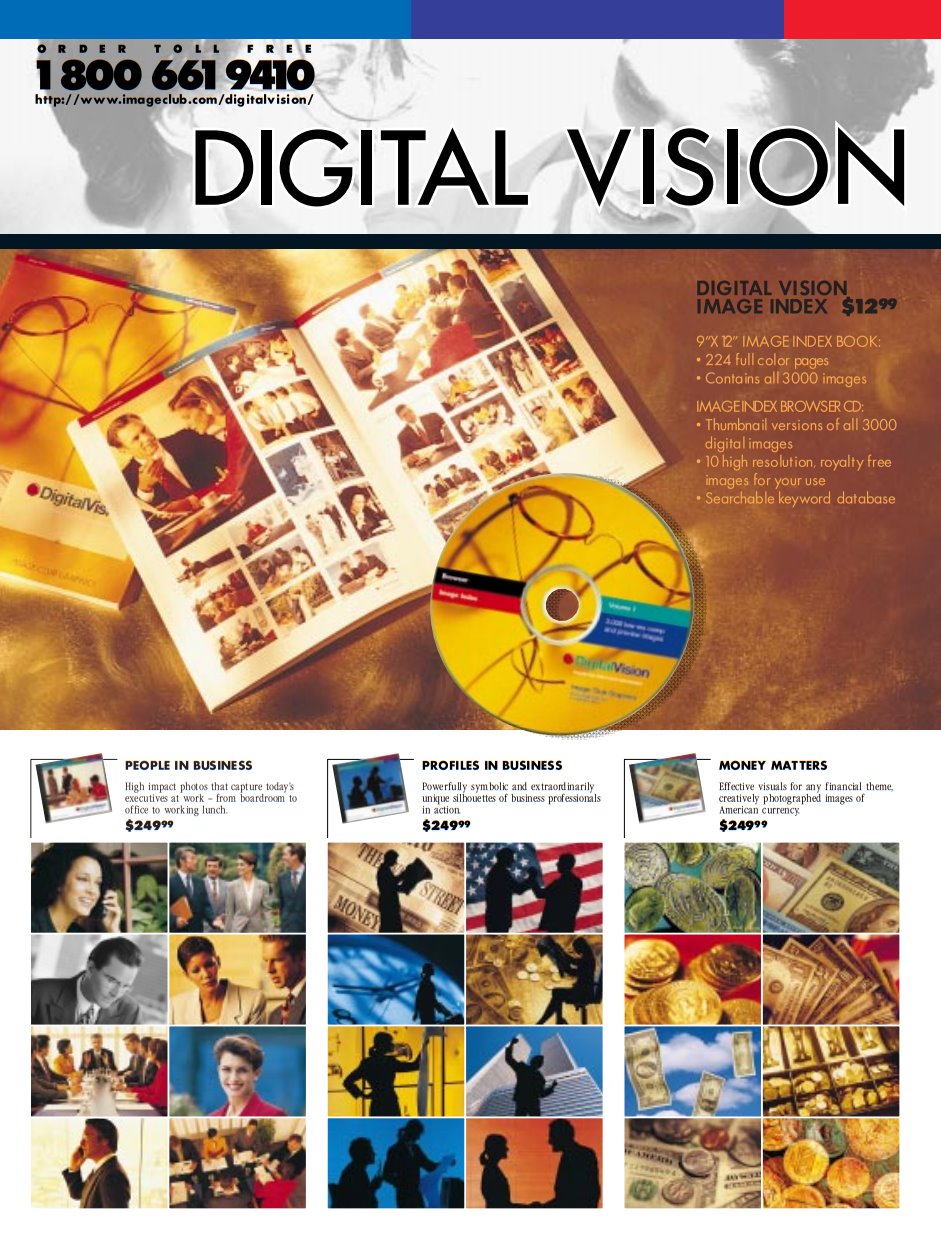
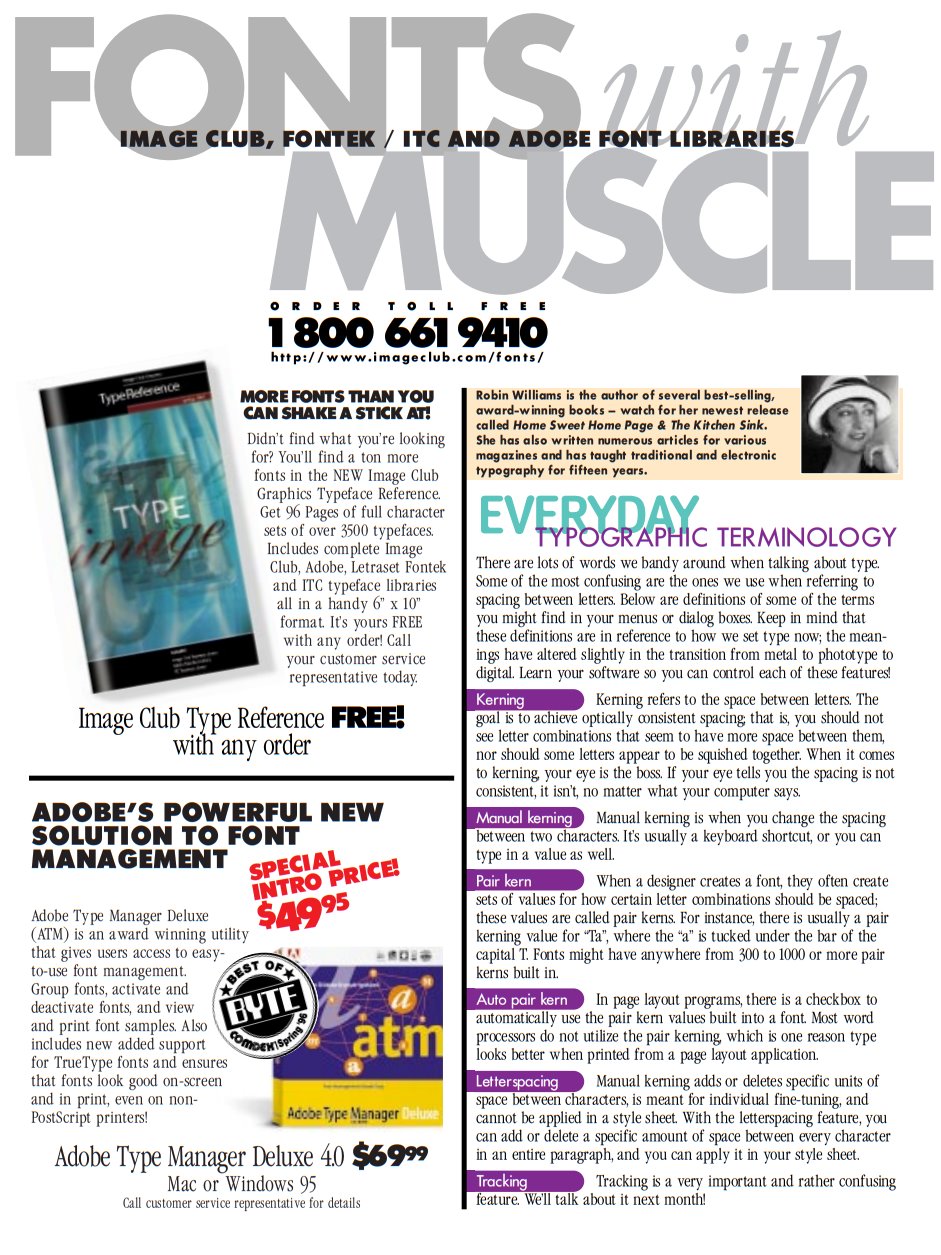
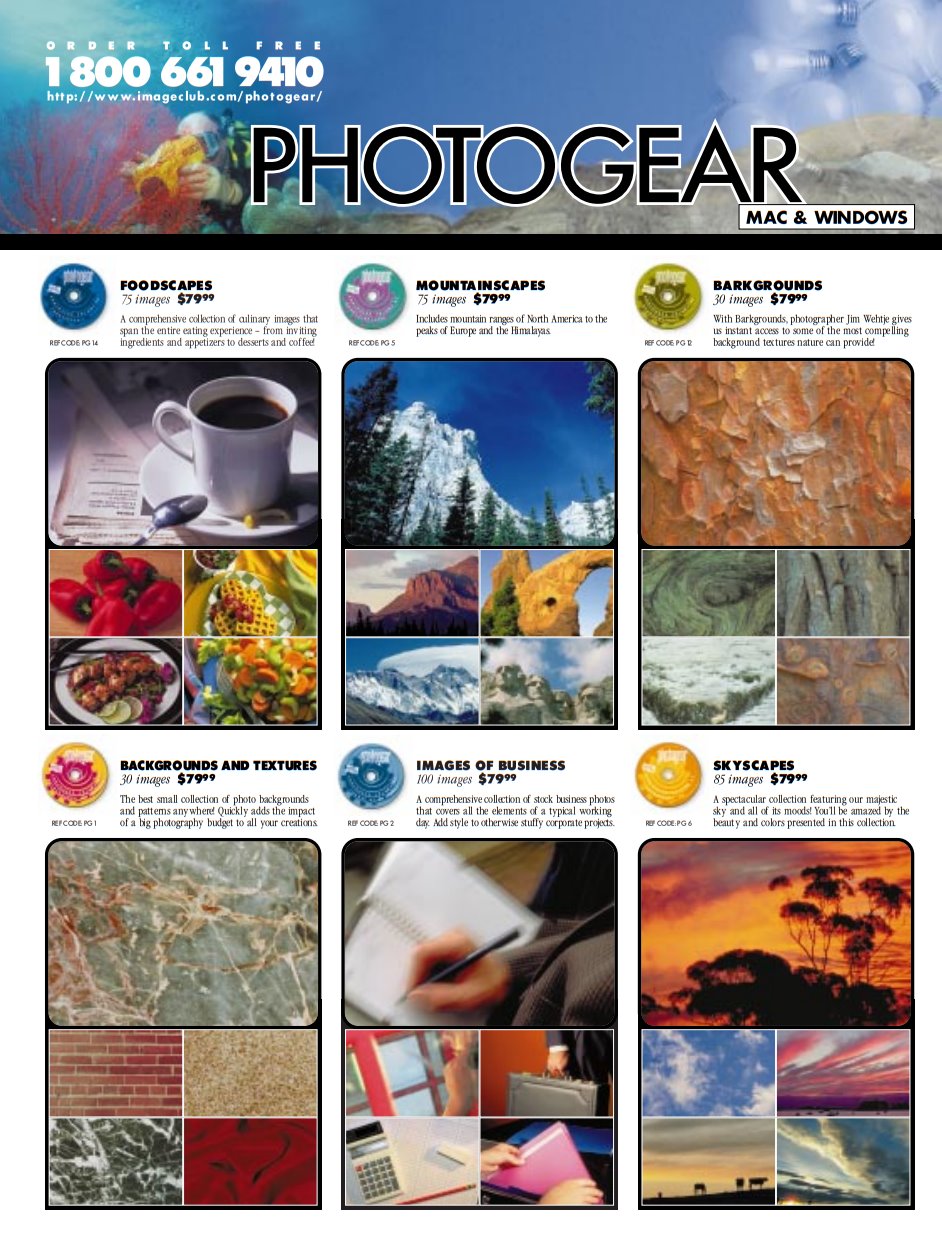
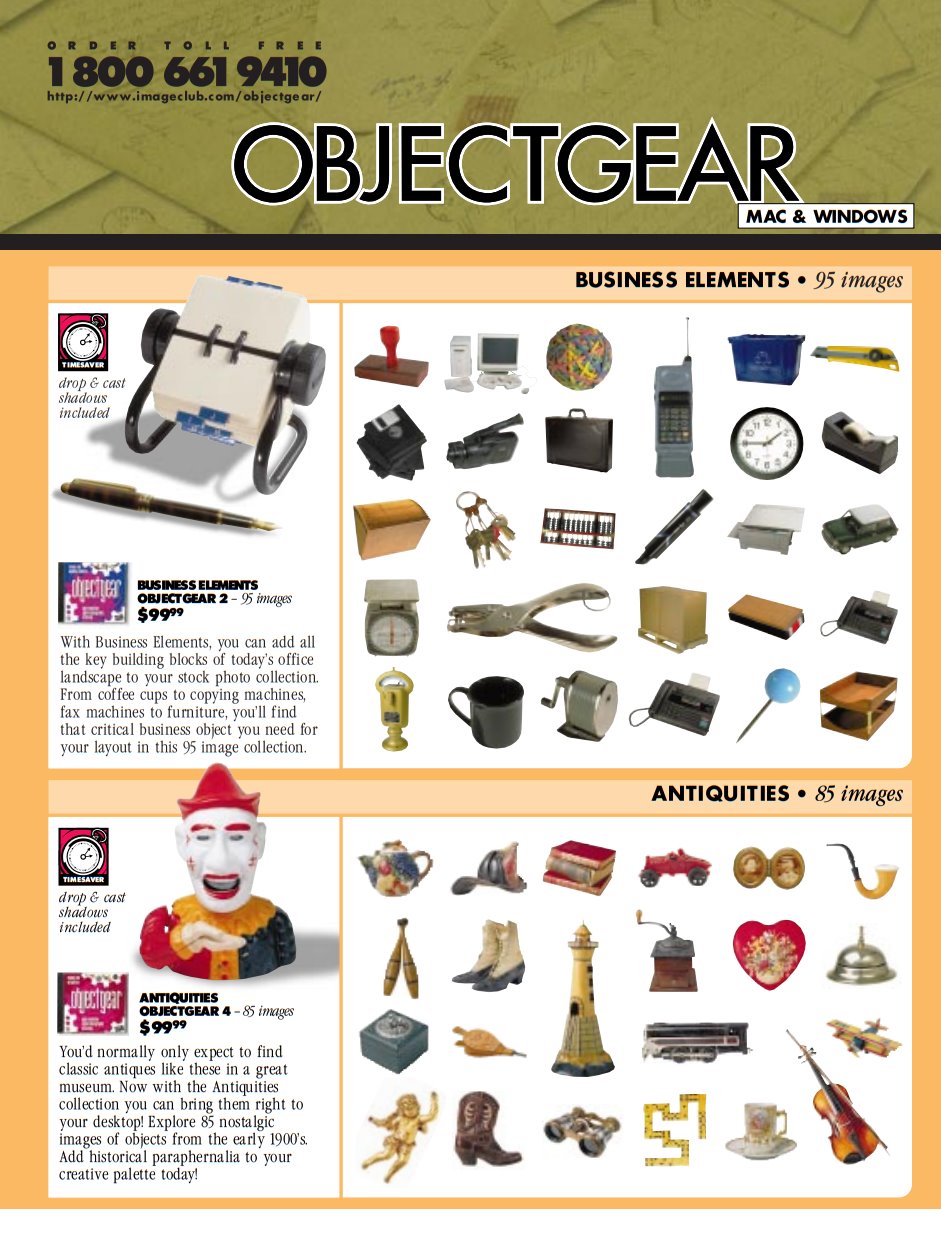
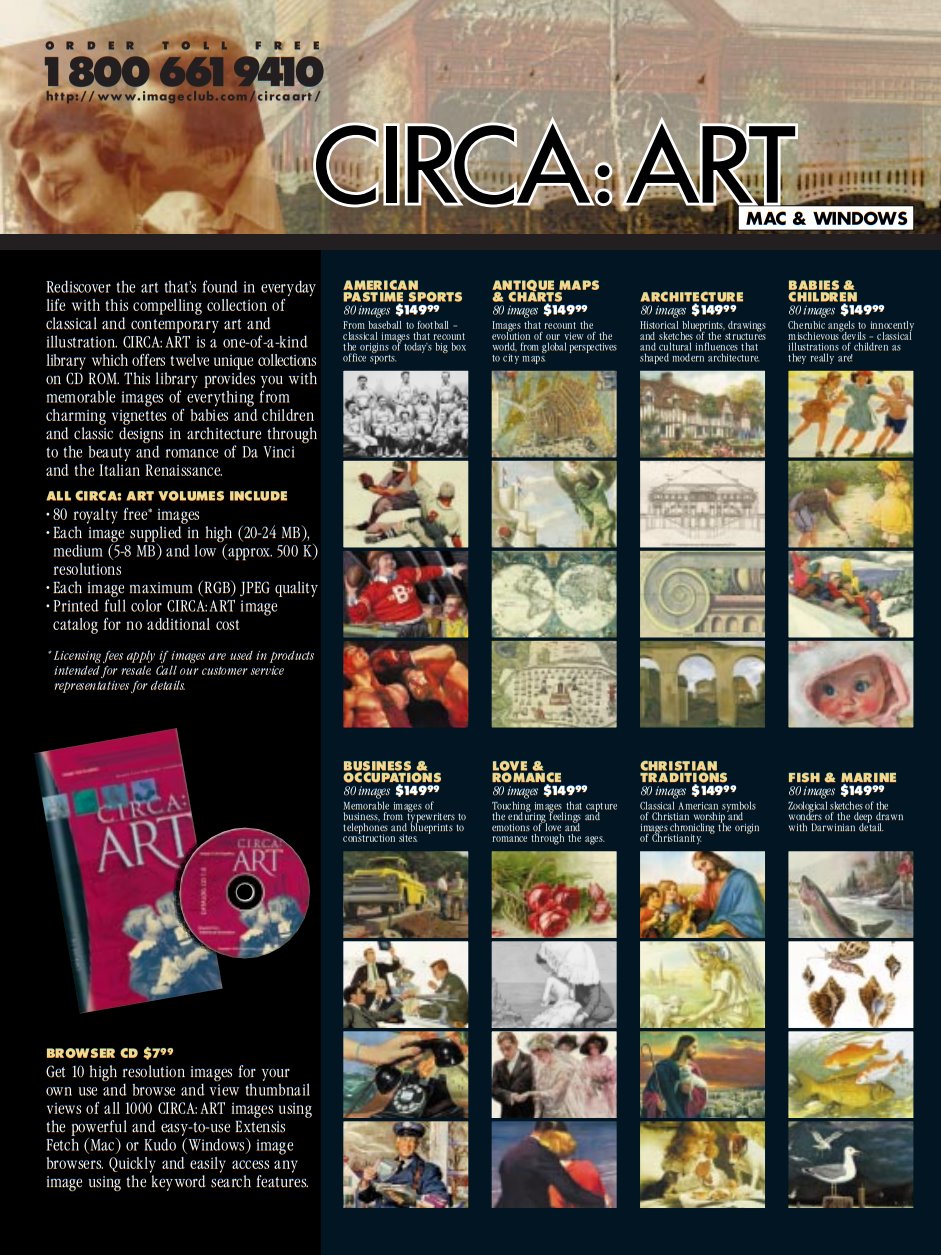
It’s a pretty stark reminder that, in living memory, things used to be a lot different before the Internet became fast and image search became ubiquitous. Granted, these were aimed at businesses and publishing houses, not consumers, folks who had enough income coming in off their work that these asset packs were a good deal for what money they’d bring in. Now, you can license out individual stock photos as needed (and carefully navigate the mess of generative AI that floods stock image sites to this day while you’re at it), or you can just use Unsplash if you’re poor, but thirty years ago, it was a very different world out there.
While I wasn’t able to find a whole lot simply looking up “image club graphics” on the Internet Archive, looking up specifically ObjectGear, PhotoGear, Digital Vision, or Eyewire for that matter turns up a ton of dumped discs for download right now. It’s obviously not complete runs or anything, but should you be a vintage stock photo aficionado, your week is now booked, you’re welcome. For everyone else, you’ll get the gist in a little bit.
Introducing the sampler CDs
I tell ya, the Internet Archive is just my 90s CD-ROM dealer at this point. The Wayback Machine is terrific rubbed on turkey and all, but it’s maybe fourth on the list of stuff that I truly love about the Internet Archive. No, what’s kino to me is the mountain of forgotten CD-ROMs that I’ve dug through again and again for projects and for fun over the last ten years. It’s not just pirated games; it’s stuff like obscure-ass sampler CDs for indie band MP3s, or clip art and fonts. It’s another phenomenal example of stuff only I ever think about, but revel in nonetheless.
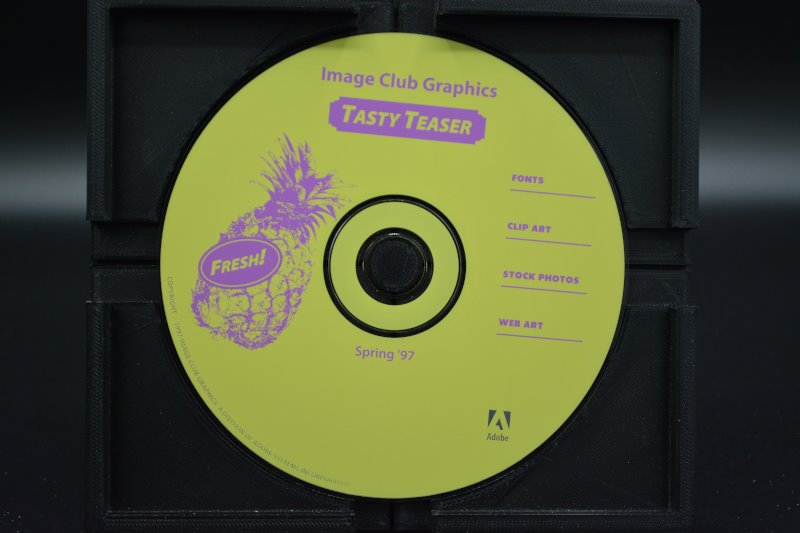
I’ve got three CDs I’ve dug through, though one’s largely a duplicate of another with less stuff, so I’ll leave it at two. The first is this Spring ’97 (nearly thirty years ago now!) “Tasty Teaser” disc, and the other is this Macworld Clip Art Sampler dated for 1998. The Tasty Teaser disc is for Windows and Mac, while the Macworld sampler is Mac-only, which necessitated a quick install of HFSExplorer to be able to open it. (If you ever find yourself unfortunate enough to need to open an ancient Mac-only CD-ROM on Windows, we might be fast friends. Give me a shout.)
All the photos on these discs, with few exceptions in JPEG format, are in TIFF format, which is still commonly supported and natively taken by IrfanView, what I use. Clip art is in the decently well-supported Encapsulated PostScript, or EPS, file format, which got me installing more shit, an IrfanView plugin and GhostScript, to actually decode them. Anything to do with WebMorsels is naturally in GIF, also easily openable to this day.
On the last note about WebMorsels: I honestly don’t think anything WebMorsels ever came out at this point. I’ve seen no evidence of it in catalogs, for sale, or dumped online, so unless someone can front me a copy of the full CD-ROM, the samplers might be it, really. Of those samplers, only that PageMill install disc came with the second batch of WebMorsels stuff, the sample layouts. Both of these samplers only have that one’s first batch, all the rules, bullet points, and header graphics, and across all three discs, they seem to be identical.
But hey, better than no crunchy graphics at all–and that PageMill disc had a ton of additional free-to-use graphics and animated GIFs courtesy of Xoom (another old-school amateur website host a la Angelfire or Geocities), plus snippets from books on Web design, plus video clips, and God knows what else. It’s intense. I don’t know if I could effectively spotlight any of that on Letters, but it’s all on the PageMill CD-ROM if you’re feeling nasty.
Selections from the sampler CDs
Because both discs are structured really similarly, and Image Club only offered a few types of products anyway, I’m simply going to group these by their type and give you a nice gallery of each to chew on. Click on each image to view it full-sized. This’ll do it from me for commentary today–just enjoy a trip into the noisy past courtesy of a guy who says he made $150,000 from associative remote viewing. More money than I’ve ever made, that’s for sure!
PhotoGear






ObjectGear
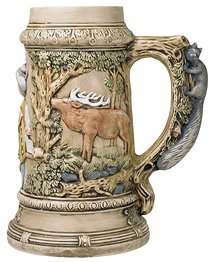
Mixture of low and high res versions of ObjectGear objects, low res being what you’d get on their catalog CDs and high res being on the ones you’d pay for. Yes, the food is made out of clay.


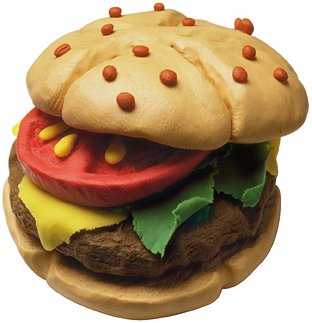
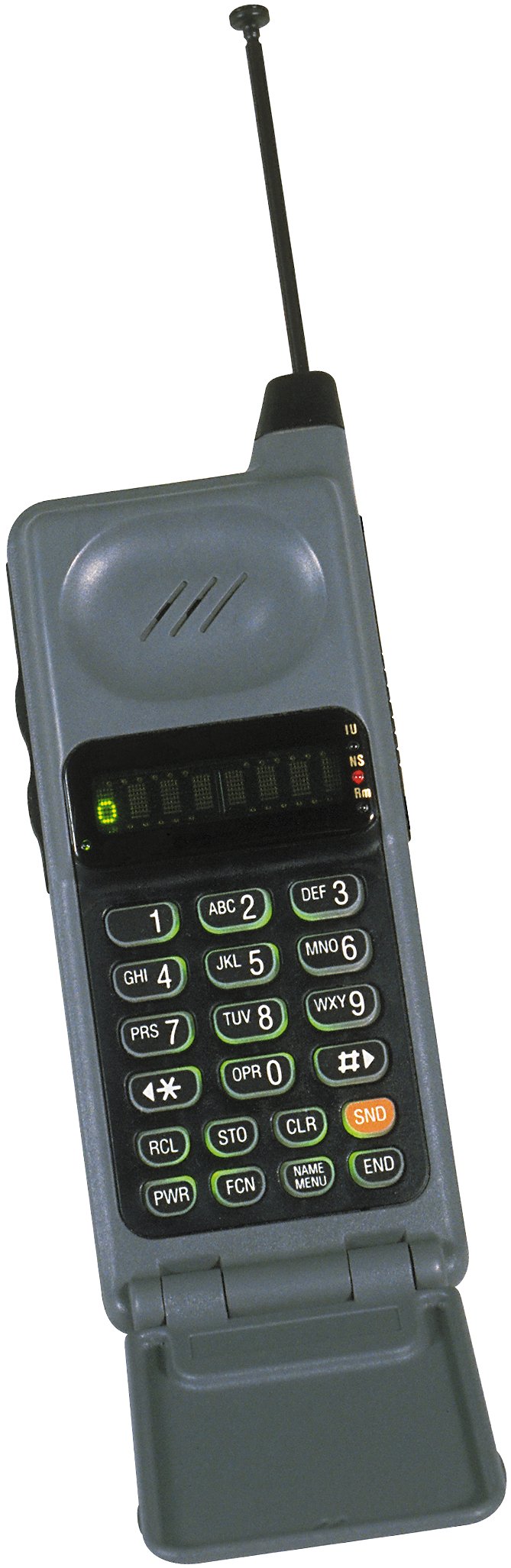

(Fun detail: the phone had some metadata attached! It read, formatting preserved, “©1995 Image Club Graphics, Inc./n/nThis file also available in low resolution EPSF format.”)
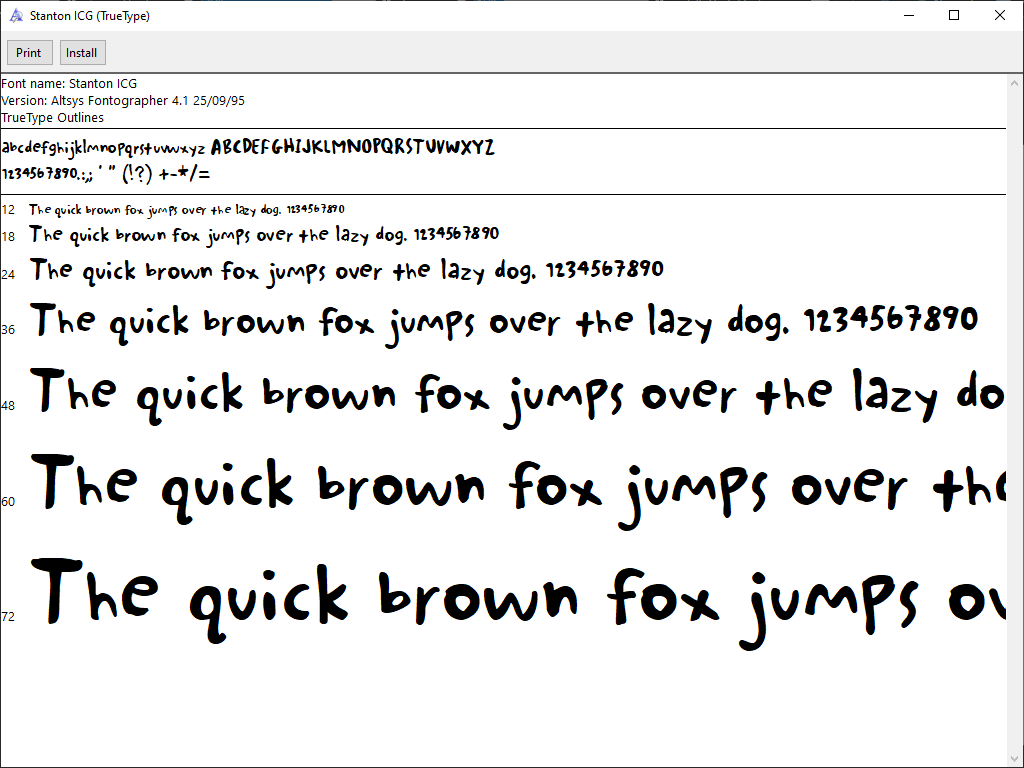
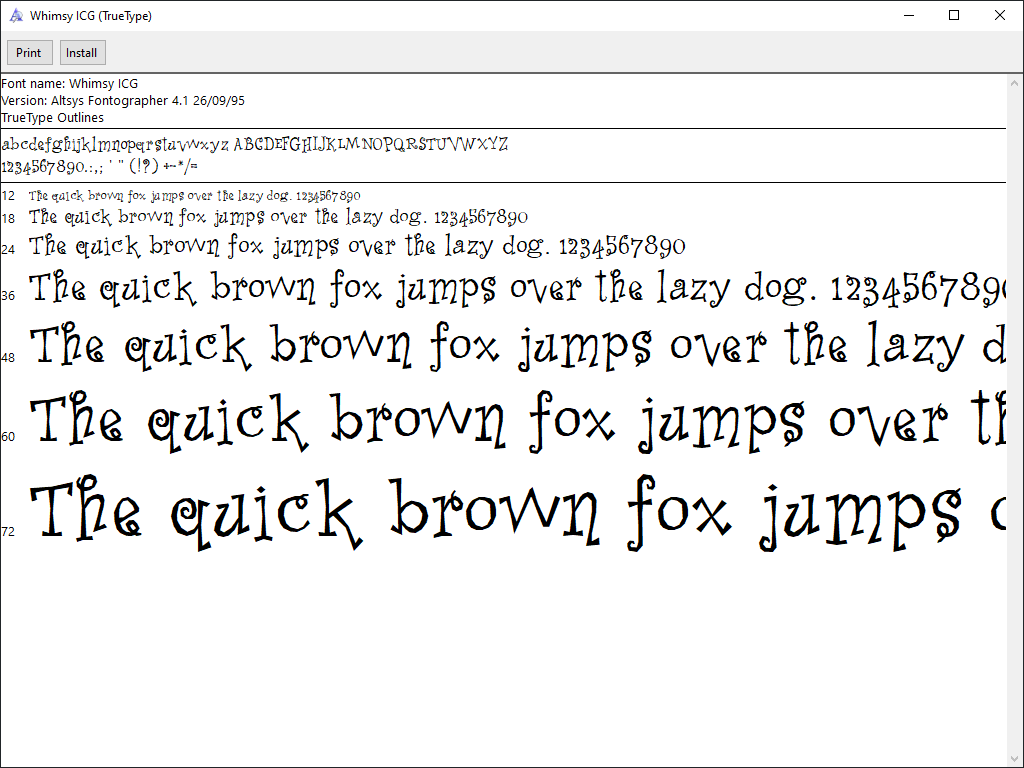
Typefaces
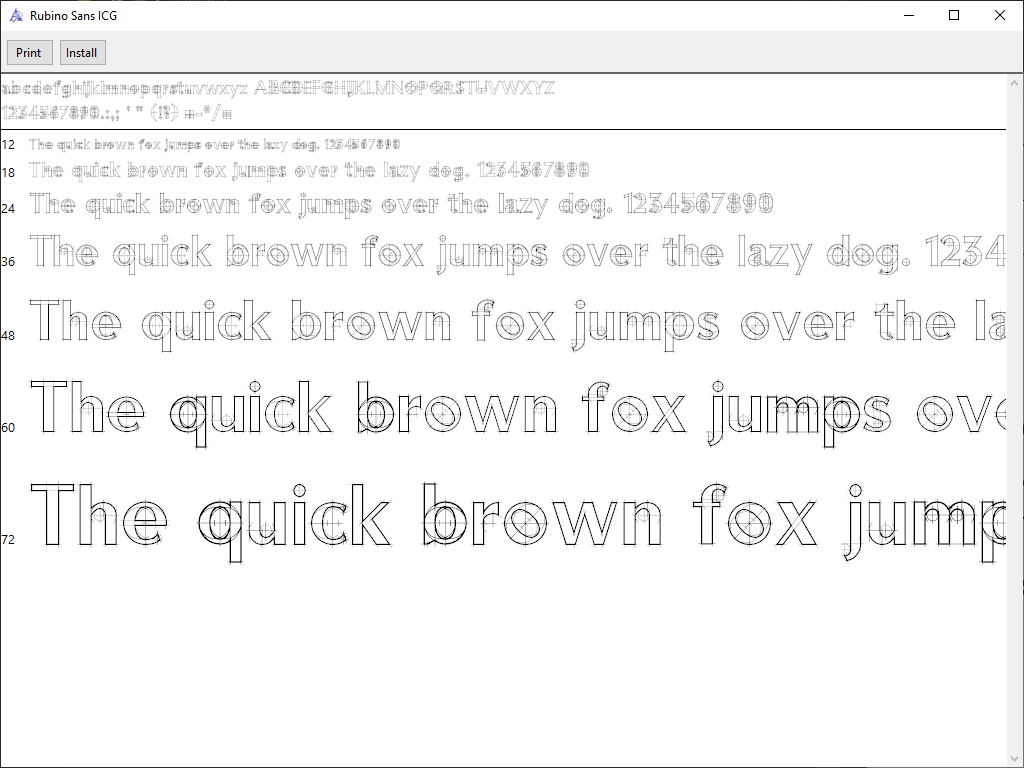
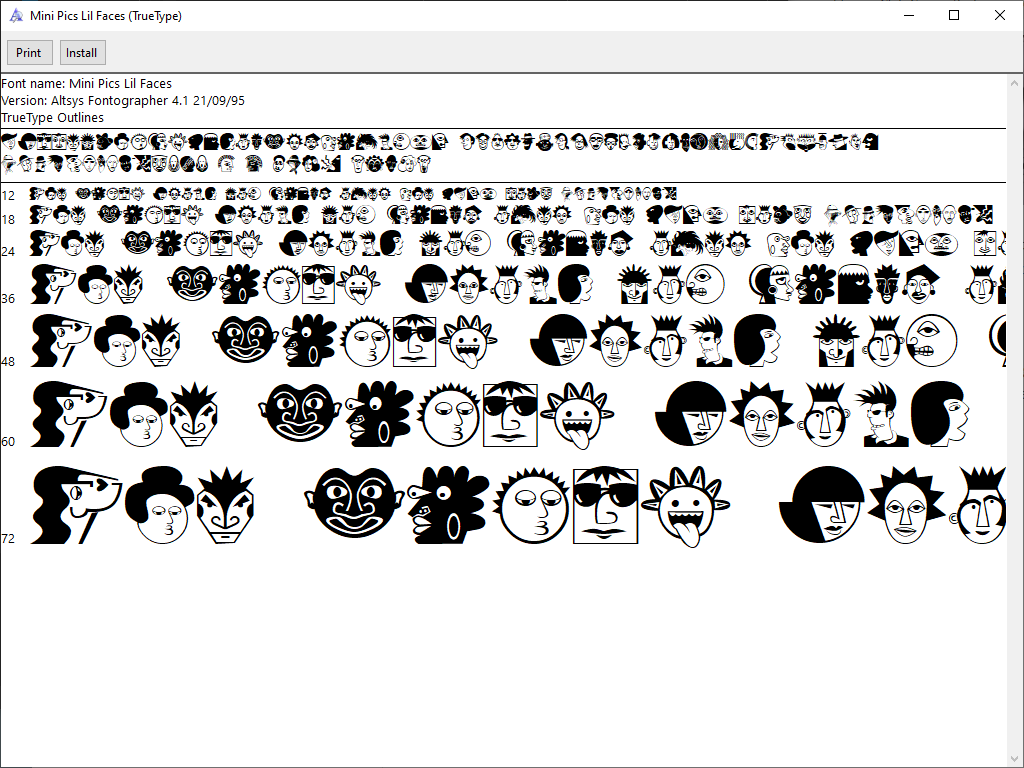
Typefaces are in a variety of formats, but all are in at least something Windows 10 can take natively. I actually really like the Stanton ICG font–so 90s. That’s Setter’s handwriting right there. (Lil Faces, meanwhile, is horrific.)
WebMorsels
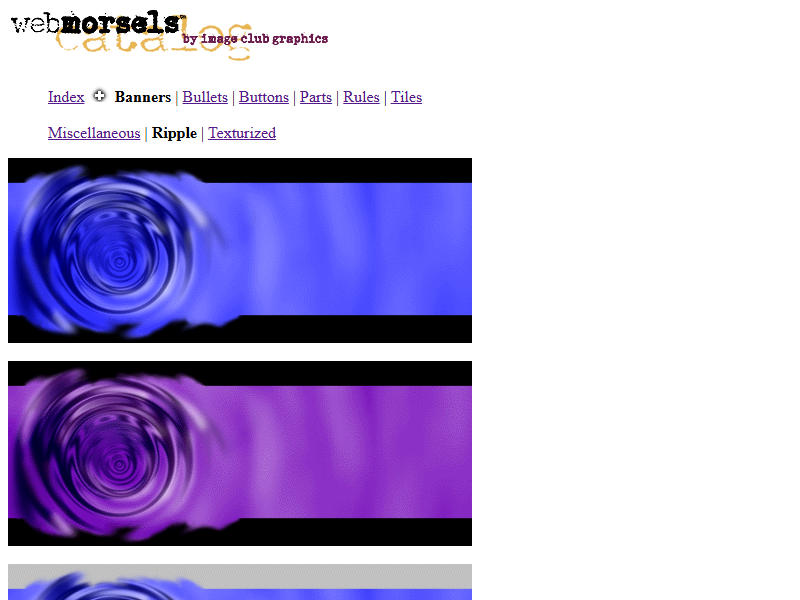
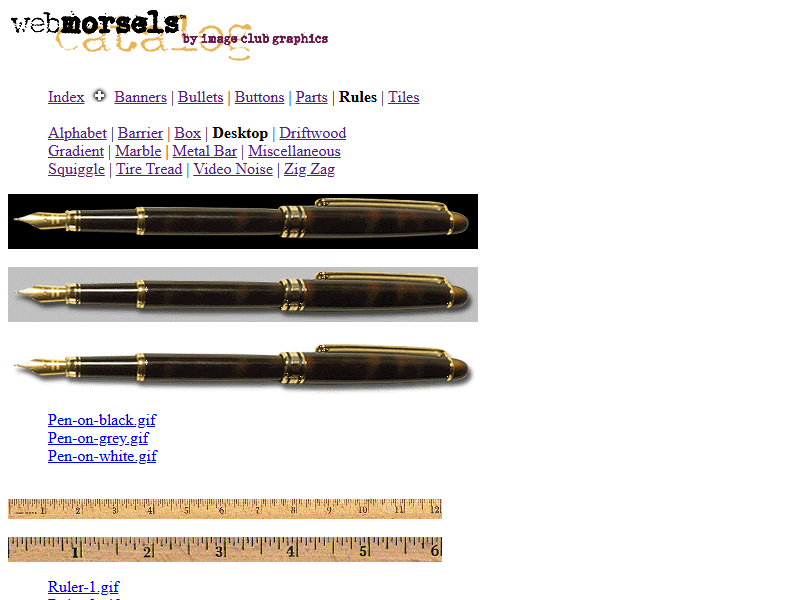
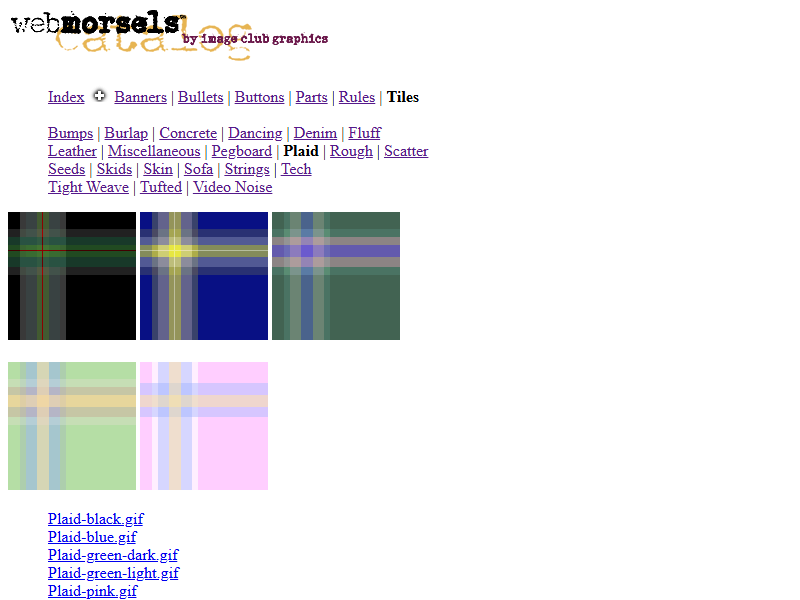
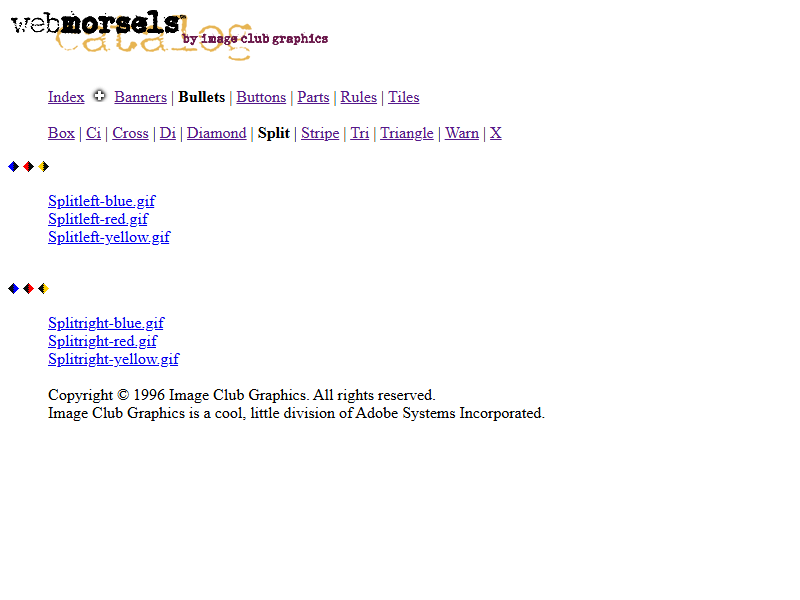
There’s so many little images to show off that, instead of spamming Letters‘ media library with them, I’ll just post some images of the gallery. If you’d like to view the gallery in full, I don’t normally like to use archives for that kinda stuff anymore, but I’ve mirrored it there. Don’t let the 4MB it takes up be in vain. Use these for your LARPy 90s sites.